Machine translation vs human translation – What’s best for your business?
The shift to digital has opened up unprecedented international business opportunities – with high-quality translation and localisation frequently driving growth. With translation budgets under pressure and ever-improving technology, machine translation (MT) can be a viable choice. MT technology is producing increasingly accurate translations and has a significant part to play in the translation and business world.
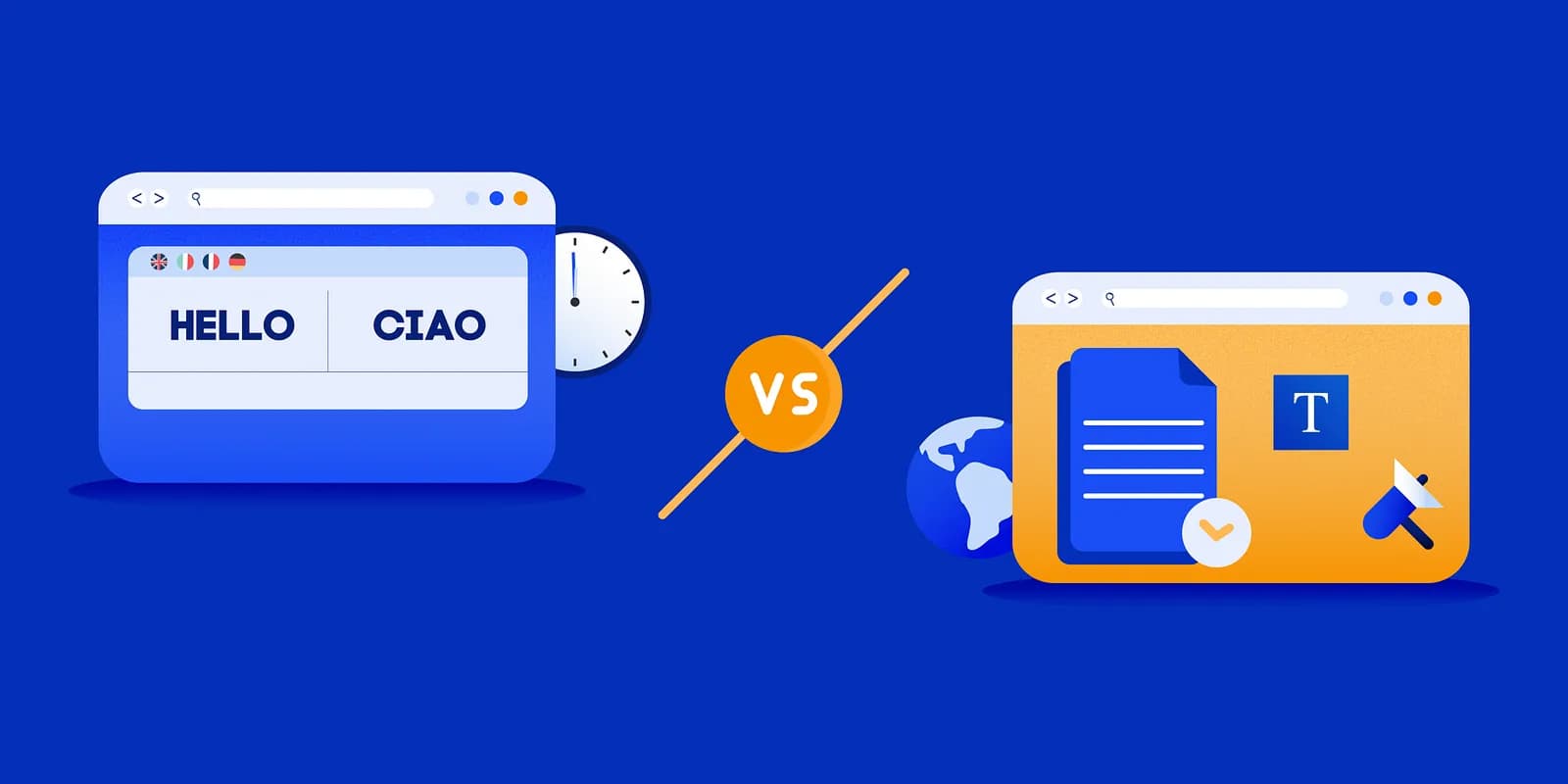
Machine translation and human translation both convert words into other languages, but they serve different needs and there are important distinctions between the two. Understanding the difference between machine vs human translation can help you gain a clearer understanding of what’s best for your business when it comes to balancing your translation mix for optimum results.
What is Machine Translation?
Machine Translation refers to the use of technology to generate a translation from one language (a source text) into another (a target text) – so a computer rather than a human undertakes the initial translating.
MT first appeared in the 1950s, and computer scientists have been grappling with the complexity of language ever since. However, the last ten years or so have seen an uptick in the accuracy and intelligence of machine translation. The use of AI has (and continues to) improve MT, so it now has a place as a viable option for some business translation needs.
Humans are still part of Machine Translation
It is important to remember that when you choose an agency MT service, a human translator is still involved in the process. A professional translator who is competent in both languages will scrutinise the MT text for context and spelling errors. This is known as MTPE (Machine translation post-editing) and this final step elevates MT compared to the many free translation tools available. This alleviates concerns about costly and potentially damaging mistakes appearing in the target text.
Machine vs Human translation: which should you choose?
When you’re deciding between machine vs human translation it may be helpful to determine your approach depending on the needs of the individual case and its objectives.
Machine translation
MT is a cost-effective choice if you need to grasp an understanding of a large amount of text quickly. So, it can work through reams of legal documentation swiftly in multiple languages at scale. Once you’ve checked the MT, the natural step may be to have the sections of interest translated by a professional translator for a more in-depth understanding. This approach can save both time and money.
In a world where multi-lingual, remote teams need to work seamlessly together, choosing MT for internal documentation and communication is another viable choice for a more cost-effective means of keeping communication lines open. This works particularly well with an organisation’s translation memory as the accuracy of translations will improve over time.
User-generated content like customer reviews on e-commerce platforms can also be machine-translated to gain insight into customers’ opinions about a product or service. These don’t need to be ‘perfectly’ translated for you to be given a steer about what customers do and don’t like about your product or service. Alternatively, it can be integrated into online chatbot conversations, or used to translate part of SKUS.
Advantages of machine translation:
- Fast turnaround time
- Can operate in multiple languages at scale
- Cost-effective choice
- Post-editing by human translators elevates quality
- Works well with translation memories
In general terms, machine translation is not the best choice for customer-facing text such as product titles, descriptions and marketing content, or text that must be error-free like safety instructions and medical documents. These are best translated by a specialist professional translator.
Human translation
A professional translator is the right choice when precision and quality are paramount. Human translation is a slower, more costly process that produces a polished, informed text. The target text will be error-free, coherent and will follow your brief in terms of clarity, flow, style and register.
Advantages of human translation:
- You benefit from human expertise
- Attentive to style, tone and context
- Texts can be localised
- Cultural sensitivities are considered
- Rigorous QA brings guaranteed quality
- Can work hand-in-hand with SEO
Let's have a chat today and discover the right mix of machine vs human translation for your business.